

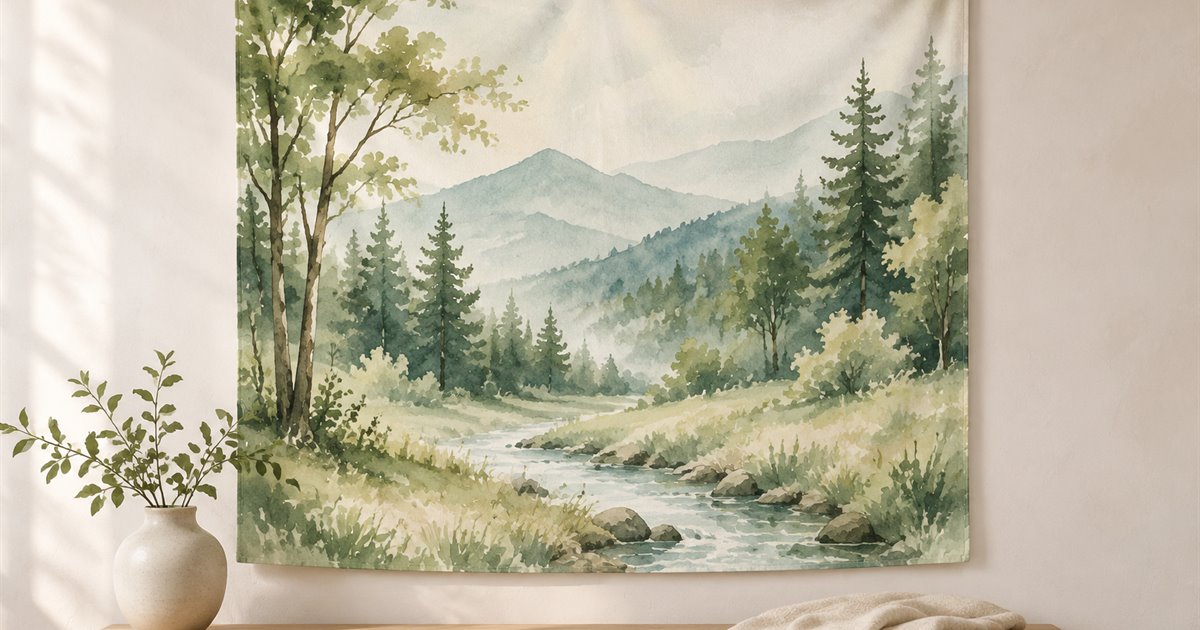
A custom tapestry flag is one of the cheapest ways to put a big image on a wall, and one of the easiest to get wrong. The photo looks crisp on the product page, the price is low, and then the parcel arrives with a panel that is either too small for the sofa wall or so large it sags between two hooks like a bedsheet.
Almost every disappointment traces back to three decisions made at checkout: the size, the fabric and the print setup. None of them are hard to get right once you know what the numbers on the listing actually mean.
What a Custom Tapestry Flag Actually Is
A printed wall tapestry is a single panel of fabric with your artwork printed across the full surface. It is not framed, not stretched over a bar, and usually not hemmed like a curtain. It hangs from small clips or metal grommets and relies on tension to sit flat.
Printed polyester, not a woven pennant
The material on most flag tapestries is a lightweight polyester. That choice is deliberate: polyester takes a dye-sublimation print, which drives colour into the fibre instead of laying a film on top, so the image survives folding, shipping and a few wash cycles. Woven or embroidered flags are heavier and far more expensive to produce one at a time, and they cannot reproduce a photograph.
How the artwork reaches the fabric
You upload a photo, a logo or text, place it inside the print area, and the file is printed edge to edge on the panel. Because there is no frame to hide the border, the composition matters: keep faces and type away from the outer edge, where a clip or a hem line can eat into the design.
Flag-style versus wall-hanging style
A flag-style panel has metal grommets along one edge for tying or clipping to a rod, which suits porches, dorm windows and party backdrops. A wall-hanging panel arrives with barb clips and traceless nail hooks and presses flat against plaster. Same print process, different hardware — so a porch and a living room usually mean two formats.
Size: Match the Wall, the Rod and the Viewing Distance
Size is where most orders go wrong, because listings quote dimensions in inches in both orientations and the two numbers are easy to read in the wrong order.
The standard size ladder
A typical custom tapestry listing runs from small to oversized: 37×29, 29×37, 60×40, 40×60, 60×51, 80×60, 60×80, 90×60 and 60×90 inches. The pair repeats in both orientations so you can pick portrait or landscape without cropping your photo to a different aspect ratio.
Read the first number as width and the second as height, then hold a tape measure against the wall. A 60×40 inch panel is roughly five feet wide — wide enough to sit above a sofa, and noticeably bigger than most people picture when they read “60 inch”.
Choosing by wall, not by price
Three quick rules cover most rooms:
- Above a sofa or bed: the panel should span about two-thirds of the furniture width. On a 78-inch sofa that means roughly 50 to 60 inches wide.
- Narrow wall or hallway: go vertical. A 40×60 or 60×80 inch portrait panel fills height without crowding.
- Dorm, rental or backdrop: 60×51 or 80×60 inches is the sweet spot — big enough to read from across a room, light enough to hang with adhesive hooks.
Viewing distance and print resolution
A tapestry is seen from a few feet away, which is forgiving. Still, supply the largest original file you have, ideally 300 dpi at final print size, never a screenshot or a copy re-saved from a messaging app.
Leave room for the drop
Measure from the hook, not the ceiling, and leave a hand’s width of clearance below the hem.
Fabric and Print Quality: What Holds Up
Single-sided is standard, and that is fine
Most flag tapestries are printed on one side only. The back shows a paler, mirrored version of the artwork because the ink has passed through the cloth. On a wall that is invisible. Held up to a window or used as a room divider, it is obvious — so if the panel will be seen from both sides, choose a product that states a double-sided print rather than assuming.
Colour and fading
Dye-sublimation on polyester holds colour well and resists fading better than a surface print. Indoors, a panel keeps its colour for years. Outdoors it will slowly soften in direct sun, which is normal for any printed textile; rotating the panel or hanging it under a porch roof roughly doubles its life.
Weight and drape
Light polyester flutters, which is right for a flag and slightly wrong for a wall, where thin cloth shows every ripple. Heavier fabric hangs flatter and hides wall texture, so on plaster, size up rather than down.
Edges and finishing
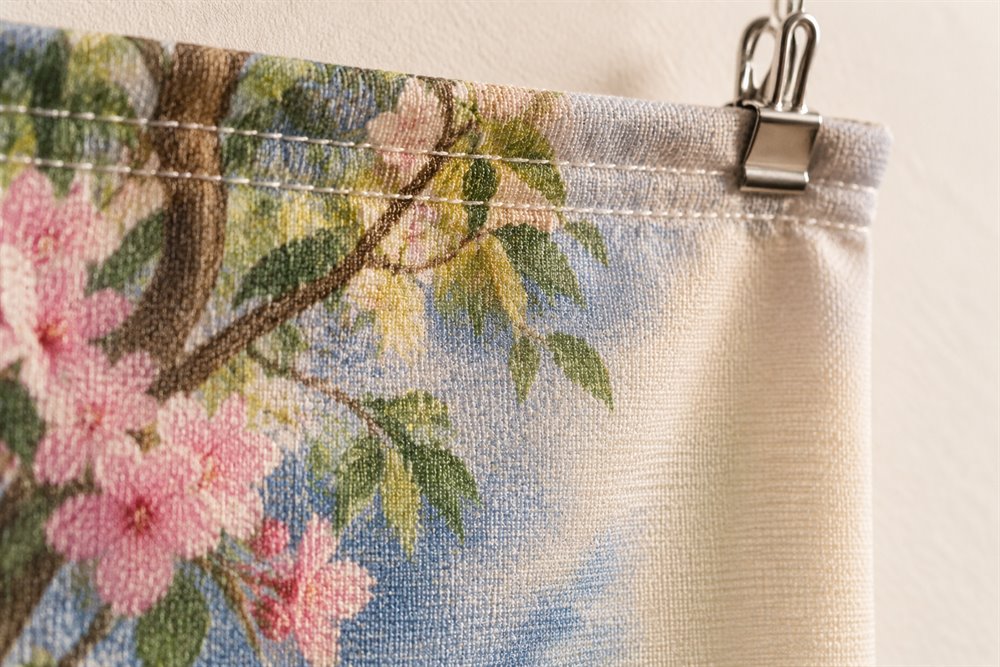
Check the perimeter: a folded, stitched edge will not fray, and a raw cut edge sheds threads after a few washes.
Hanging a Tapestry Flag Without Damaging the Wall
Use the hardware that ships with it
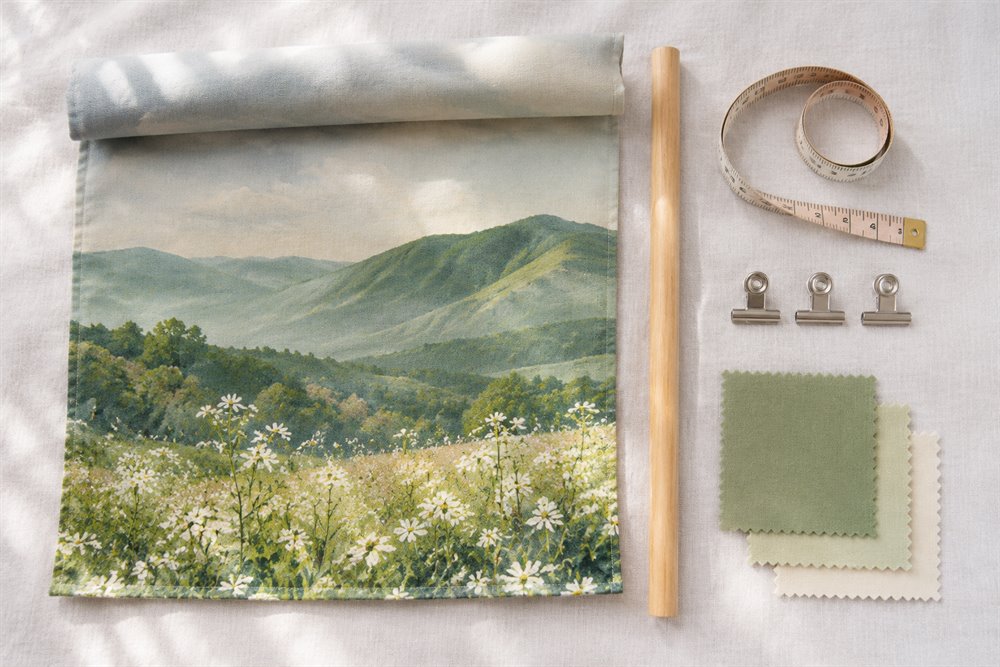
Wall-hanging tapestries commonly arrive with three barb clips and three traceless nail hooks; each hook leaves a pinhole and the clips grip the fabric edge so the panel sits almost flush. Fit all three, evenly spaced, even on a small panel — two clips on a wide panel is the most common reason a tapestry sags in the middle.
Tension is the whole trick
Pull the fabric gently taut before seating the last clip — not stretched, just free of slack. Slightly tight reads as a printed canvas; loose reads as laundry.
Grommets, rods and rental-friendly options
If your panel has grommets, thread a slim rod, a dowel or a length of twine through them, then hang the rod on two hooks: weight spreads across the whole edge and the corners stop curling. In a rental, adhesive hooks rated well above the panel weight work up to about 80×60 inches; larger sizes need the traceless nail hooks set into studs or anchors.
Avoid direct heat and damp
Keep the panel off radiators and out of steamy bathrooms. Heat and moisture cause wavy edges and mildew, not the print itself.
Care and Seasonal Storage
- Wash cold, by hand or on a delicate cycle. Skip bleach and fabric softener.
- Hang or line dry. A hot dryer sets wrinkles and can shrink the panel unevenly.
- Iron on the reverse, low heat. Never press the printed face directly; use a cloth between iron and fabric.
- Store rolled, not folded. If the panel comes down for the season, roll it around a cardboard tube so the crease lines do not become permanent.
Common Mistakes to Avoid
- Ordering by photo, not by tape measure. Mark the size on the wall with painter’s tape before you buy.
- Reading the size in the wrong order. Width comes first; portrait sizes repeat the pair reversed.
- Uploading a forwarded image. Send the original file, not a chat copy.
- Hanging a wide panel on two clips. Use three, evenly spaced.
- Expecting a two-sided print at a one-sided price. Confirm the print side first.
Frequently Asked Questions
What is the difference between flag tapestries and a custom tapestry flag?
Both describe a printed polyester panel. Flag tapestries usually means the grommeted version for hanging from a rod; a wall tapestry is finished for clipping flat against a wall. Check the hardware on the product page, not the name.
Can I put a photo on a tapestry flag?
Yes. Upload a high-resolution image and the print reproduces photographic detail well on polyester. Portrait photos work best on a vertical size such as 40×60 or 60×80 inches, while group shots and landscapes suit the wider 60×40 or 90×60 layouts.
How big should an american flag tapestry be on a wall?
A common choice is 60×40 inches for a wall above a sofa, and 80×60 or larger for a full-height feature wall. Measure the wall space first, then pick the size that covers roughly two-thirds of the furniture below it so the panel reads as deliberate rather than undersized.
Will the print show through the back?
On a standard single-sided polyester panel, yes — the reverse shows a lighter, mirrored version of the artwork. That is normal and invisible against a wall. If the panel will be seen from both sides or backlit by a window, look for a double-sided print option.
How do I hang a tapestry without nails?
Use adhesive hooks rated above the panel’s weight, fit one at each top corner and one in the middle, and clip the fabric in place. For panels over about 80×60 inches the weight makes adhesive unreliable; the traceless nail hooks supplied with the panel leave only pinholes and hold far better.
Ready to Hang Yours
Start with the custom tapestry: choose your size from the nine standard dimensions, upload a high-resolution photo or logo, and the panel arrives with the clips and hooks you need to hang it the same day. If you want the flag format with grommets for a porch or a party backdrop, the custom American tapestry flag with picture uses the same print process on a grommeted panel. Browse the rest of the wall decor collection for coordinating prints, or go straight to the full shop to see what else can carry the same photo.
Leave a comment