

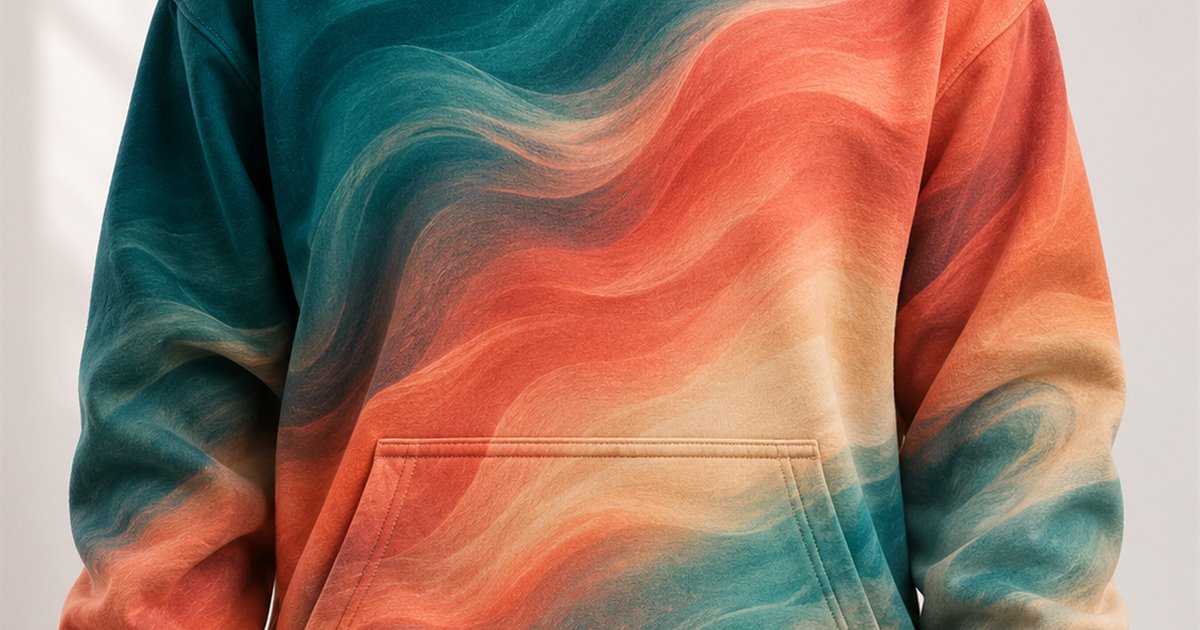
The first 3D hoodie most people receive is either a revelation or a disappointment, and the difference is almost never the artwork. It is whether the design was built for a full-print garment or simply dropped onto a blank and hoped for the best. A hoodie printed edge to edge across the body, sleeves and hood goes through a completely different production path than a logo on the chest, and the whole look depends on decisions made long before the press heats up.
Here is what actually happens between your upload and the parcel, and which of those steps you control.
What “3D” Really Means in a 3D Hoodie
Marketing uses “3D” loosely. In practice a 3D hoodie is a garment whose artwork wraps continuously across panels, so the print reads as part of the fabric rather than as decoration sitting on top of it.
Sublimation, not a patch
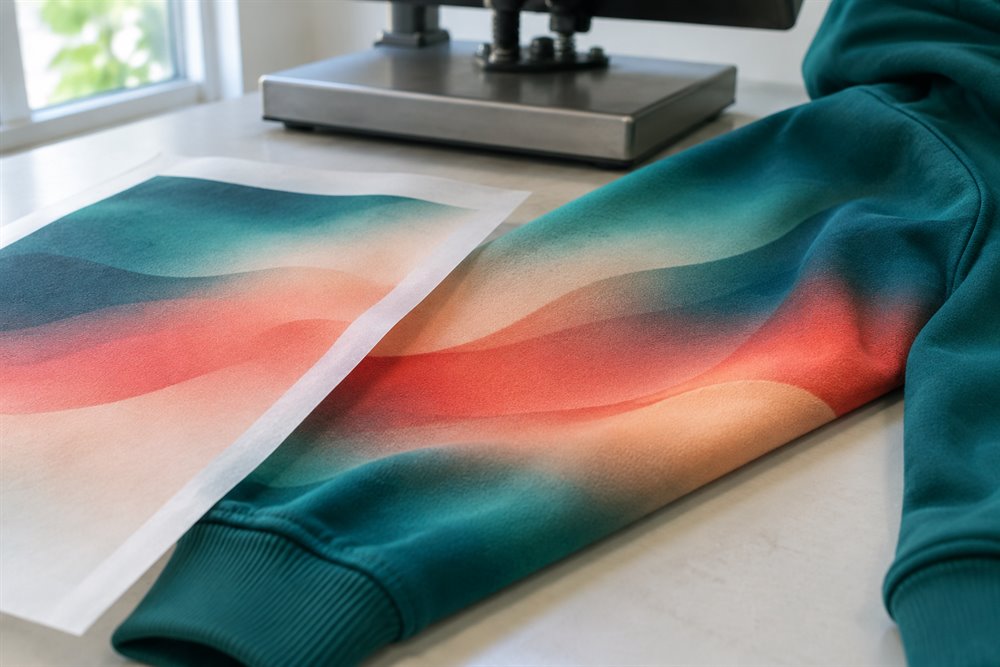
The print is applied by dye sublimation. Artwork is printed onto transfer paper with disperse dyes, laid against the fabric, and pressed at roughly 190 to 200 degrees Celsius. The dye turns to gas and bonds into the polyester fibres, then re-solidifies. Nothing sits on the surface, so there is no plastic hand-feel, no film to crack, and no raised edge to catch a fingernail.
Cut-and-sew instead of print-on-blank
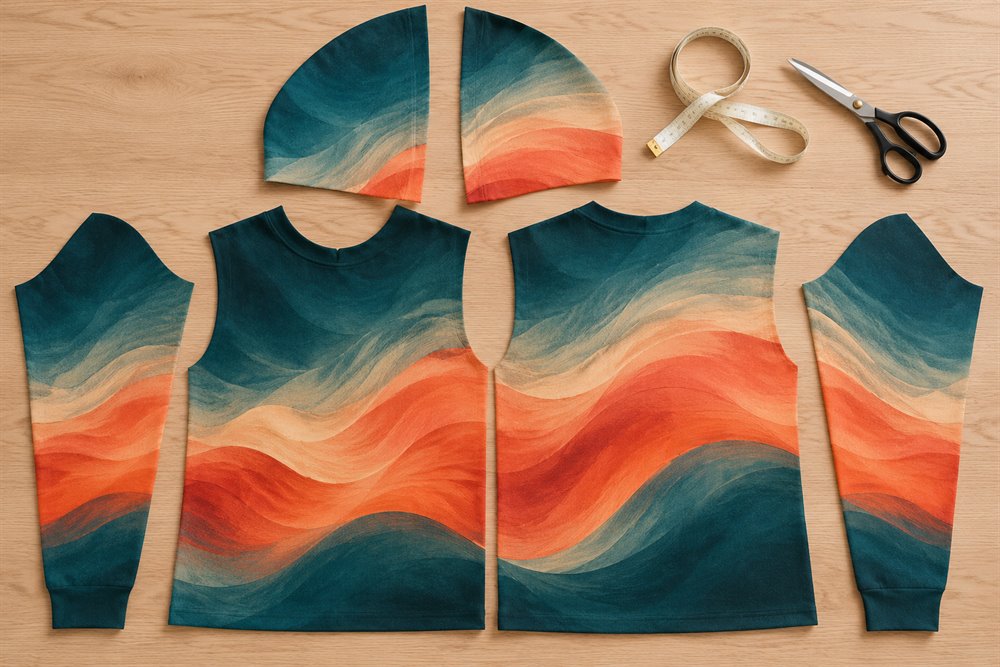
A screen-printed hoodie starts as a finished garment. A full-print hoodie starts as flat fabric and a pattern. The front body, back body, two sleeves, hood panels and sometimes pocket and cuffs are printed as separate flat pieces, then cut and sewn together. That is why the design must exist as a panel map, not a single picture.
Where the seams eat the artwork
Every seam removes a few millimetres of printed surface. A design with a face or a wordmark straddling the shoulder line will have it interrupted. Experienced designers keep critical elements at least 3 to 5 centimetres inside panel boundaries and treat seam lines as a design constraint rather than an accident.
The Design File: What Survives the Press
Resolution and format
Supply the largest file you have. At full garment size a 300 dpi file is ideal, 150 dpi is workable, and anything pulled from a social media download will show softness and blocky gradients once enlarged to 60 centimetres wide. PNG or high-quality JPEG both work; a vector file is only useful if the artwork is genuinely vector.
Contrast and colour depth
Sublimation prints brightest on light fabric, because the white of the polyester acts as the paper. On a black or dark navy base the same file turns muddy, and dark blues and purples collapse into near-black. If you want a dark hoodie with a bright illustration, the artwork needs its own light background printed behind it.
Fine type and thin lines
Hairline strokes under about 1 millimetre disappear at garment scale, and small serif text fills in. Increase weight, increase size, and avoid thin outlines around busy photographs. Gradient blends also band on large areas; adding a tiny amount of noise hides it.
How a Custom 3D Printed Hoodie Is Made, Step by Step
- Artwork is checked against the panel map. The file is placed onto each panel template, not onto a photo of a finished hoodie, so the printer knows what piece each section belongs to.
- A digital mock-up is generated. This preview shows where seams will fall, which is the last practical chance to move a design element before it is committed.
- Panels are printed on transfer paper. Colour is managed per panel; large orders print all panels of one garment together to keep the run consistent.
- Fabric is pressed. Heat and pressure drive the dye into the polyester. Temperature drift here is what causes patchy colour between two hoodies in the same order.
- Panels are cut, matched and sewn. Pattern matching across the chest and sleeve seam is done by hand, which is why full-print garments cost more than a printed blank.
- Trims, drawcord and finishing. Ribbed cuffs, waistband and pocket are attached, then the garment is checked and packed.
Fabric, Weight and Hand Feel
Polyester content is not optional
Sublimation only bonds to polyester. A cotton hoodie cannot hold a full-print design that lasts; it needs at least 65 percent polyester, and most full-print garments use a polyester-rich blend around 230 to 280 gsm. Below that the hoodie feels thin and the print shows every fold of the shirt underneath.
Brushed inside, smooth outside
A common build pairs a smooth printable face with a brushed fleece interior for warmth. Ask which side is brushed before you order if the hoodie will be worn against skin in winter.
What the print feels like
On a properly pressed sublimation hoodie the print area feels the same as the unprinted fabric. If you can feel a rubbery layer, the garment was printed with a heat-transfer film instead, and that film is what eventually peels.
Fit, Sizing and Where the Print Stretches
Measure a hoodie you already wear
Lay a hoodie flat, measure chest width seam to seam, body length and sleeve length, and compare those numbers to the size chart rather than to the letter on the label. Full-print garments sit slightly differently from a standard blank because the seam allowance differs.
Big prints and body shape
An all-over print magnifies fit problems. A tight hoodie stretches the print across the chest, thinning colour and showing white stress lines over time. Size up if you are between two sizes, especially for a design with large flat colour fields.
Care instructions belong in the design phase
Print that wraps under the arm will be washed, rubbed and stretched more than print on the back. Busy detail in high-friction zones wears visually faster than the same detail placed centrally.
Colour Accuracy: Why Your Hoodie Looks Different From the Screen
Screens emit light; fabric reflects it. Expect the finished print to read slightly duller and warmer than the file on a monitor. Two further variables matter: whether your file is in RGB or CMYK, and whether the shop colour-matches against a physical swatch.
Judge by comparison, not by memory
Look at the preview against something physical in the same room, and check how the design reads at arm’s length rather than zoomed in. If exact brand colour matters, ask for a swatch or order one sample before a bulk run.
Care That Keeps the Print Alive
- Wash cold, inside out. Heat is the enemy of the print, not water.
- Skip fabric softener and bleach. Softener leaves a residue that dulls colour.
- Tumble low or hang dry. High dryer heat can set creases into the printed surface.
- Do not iron the print. If you must press, use a cloth and low heat on the reverse.
- Avoid rough Velcro and zips. They abrade print in the wash drum.
Common Mistakes to Avoid
- Designing on a photo of a hoodie instead of a panel map. Seam placement then becomes a surprise.
- Uploading a screenshot. Resolution is lost twice over.
- Putting key art on the seam line. Half a face on the sleeve is the classic full-print failure.
- Choosing a black base for a pastel design. The colours will sink into the fabric.
- Ignoring the size chart. Full-print garments show fit errors more than plain ones.
Frequently Asked Questions
Is a 3D hoodie just a printed hoodie?
No. A printed hoodie usually has artwork applied to a finished garment, often on the chest or back only. A 3D hoodie is printed on flat fabric panels before cutting and sewing, so the design wraps continuously across the body, sleeves and hood.
Can any photo be turned into a full-print hoodie?
Most photos work if the original file is sharp and large. Low-light phone shots, heavy filters and images saved from chat apps lose too much detail when scaled to garment size. Photos with a clean background and one clear subject convert best.
How long does the print last on a custom 3D printed hoodie?
With cold washing and low-heat drying, a sublimated print typically holds its colour through dozens of washes because the dye sits inside the fibre. Fading comes mostly from hot water, hot dryers and direct sun, so those three habits matter more than the brand of detergent.
Does the print crack or peel?
Sublimation print does not crack or peel because there is no layer on top of the fabric. If a garment does peel, it was produced with a heat-transfer film rather than a true sublimation press, which is a different process.
What file should I send for my 3D hoodie design?
Send the largest PNG or high-quality JPEG you have, ideally 300 dpi at final print size, with text and faces kept a few centimetres inside the panel edges. Vector artwork is welcome but only helps if the file is genuinely vector.
Start Your Design
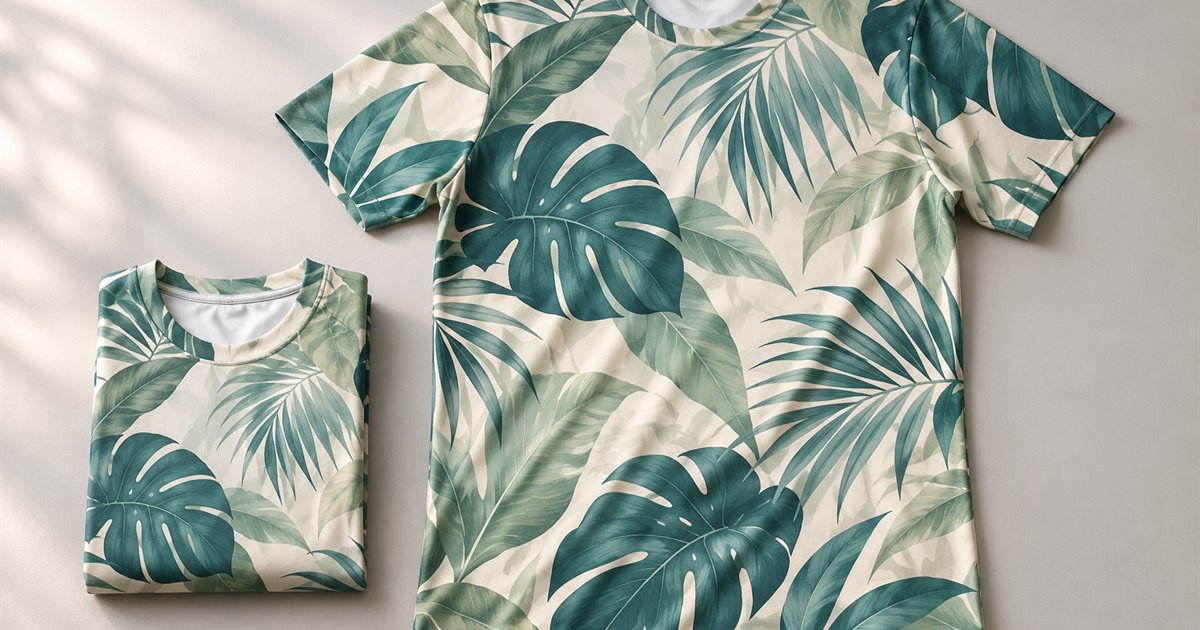
Ready to see the wrap for yourself? Open the custom 3D print hoodies page, upload your artwork and check the mock-up against the seam lines before you order. If you prefer a single chest or back placement, the all over print t-shirt uses the same process on lighter fabric. Browse the rest of the hoodies category for weight and colour options, or head to the full shop to compare every printable style side by side.
Leave a comment