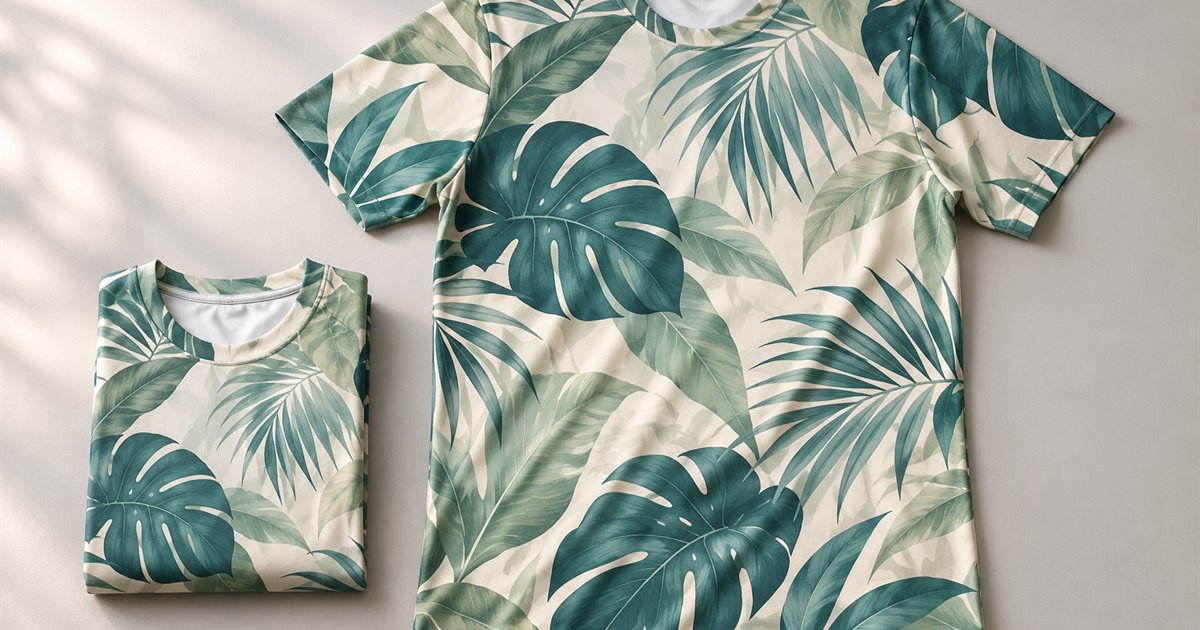
Most custom t-shirts are printed on a finished garment: a blank is sewn, then a design is pressed onto the chest. An all over print t-shirt reverses that order. The fabric is printed first, edge to edge, and then cut and sewn from that printed cloth. The difference sounds technical, but it is the reason an all over print tee can wrap a design around a sleeve, over a shoulder seam, and down the back without a single blank patch.
It is also the reason buyers get surprised. A design approved on a rectangular mockup can come back with a seam running through the middle of a face, a hem that cuts off the bottom of a graphic, or colours that look duller than they did on a screen.
What All Over Print Really Means
All over print — often shortened to AOP — describes a garment where the artwork covers the entire surface rather than a single placement. There is no blank shoulder, no unprinted hem, no plain sleeve.
Cut-and-sew instead of screen printing
The process starts with rolls of fabric that are printed continuously, then cut using a pattern and sewn into a shirt. Because the print exists before the seams, the artwork can flow across panels. A good production house prints with a bleed allowance so the pattern lines up where the front meets the side.
Where the seams land
Seams are the one thing an all over print cannot avoid, and they are where quality shows. On a well-made tee, the artwork continues across a side seam with only a thin interruption from the stitch line. On a cheap one, the pattern jumps, the colours shift half a shade, and a face or logo lands directly on the join. When you review a proof, ask where the side seam and shoulder seam will fall on your artwork, not just what the flat front looks like.
Sublimation is the usual method
Most polyester all over print is produced by dye sublimation: the ink is converted to gas and driven into the fibre, so the colour sits inside the material rather than on top of it. That is why an AOP tee feels smooth instead of slightly rubbery, and why the image does not flake off in the wash. The tell-tale sign of true sublimation is a slightly muted mirror image visible on the inside of the fabric.
Fabric Choice Decides How the Print Looks and Feels
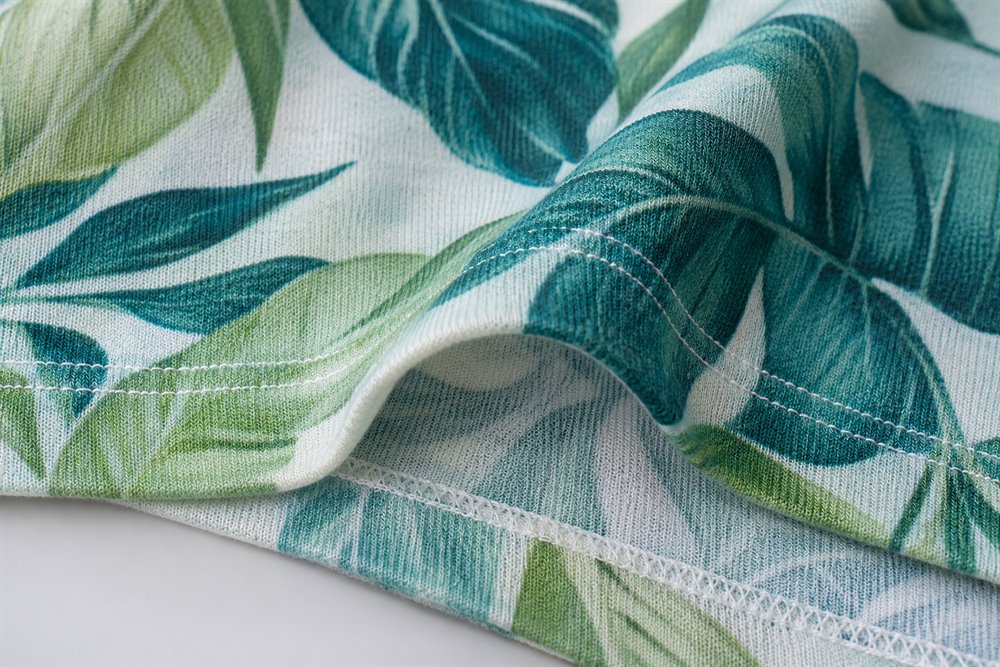
The same artwork can look bright and crisp on one fabric and washed out on another. Fabric is the variable buyers underestimate most.
Polyester and poly-blends
Sublimation only bonds properly to polyester. A 100% spun polyester or a polyester-rich blend gives the sharpest detail and the most saturated colour, and it holds the print through repeated washing. Performance-minded tees, sports cuts, and highly detailed graphics belong here.
Cotton and cotton-rich blends
Cotton takes pigment or reactive printing rather than sublimation, which means the ink sits closer to the surface and the hand feel is more traditional. Prints on cotton read slightly softer and less glossy — good for vintage or hand-drawn artwork, less good for razor-sharp photographic detail. Cotton also shrinks, so cut-and-sew patterns need a pre-shrunk fabric or a size allowance.
Fabric weight and drape
Weight is quoted in grams per square metre. Roughly 140–160 gsm gives a light summer tee that drapes well; 180–200 gsm feels substantial and holds a structured shape. On an all over print, heavier fabric shows fewer wrinkles and reads the artwork more cleanly, while lighter fabric stretches detail slightly.
Getting the Fit Right
Because an all over print tee is cut from printed cloth, sizing behaves a little differently from a standard blank.
Measure a shirt you already like
Lay a t-shirt flat and measure chest width from armpit to armpit, body length from the collar seam to the hem, and sleeve length from the shoulder seam. Compare those numbers with the size chart rather than trusting the letter on the label — AOP garments often run between two conventions, since the pattern is drafted for the print, not adapted from a stock blank.
Why the print makes a garment look different
A dark, dense AOP print visually narrows the body; a light print with a large repeat can make the same cut look wider. If you are between sizes, size up on dense dark prints and stay true to size on open, light designs.
Sleeves, hems and crop risk
Sleeve length changes where the artwork lands. A longer sleeve gives more room for a pattern to continue around the arm; a capped or cropped sleeve cuts the design short.
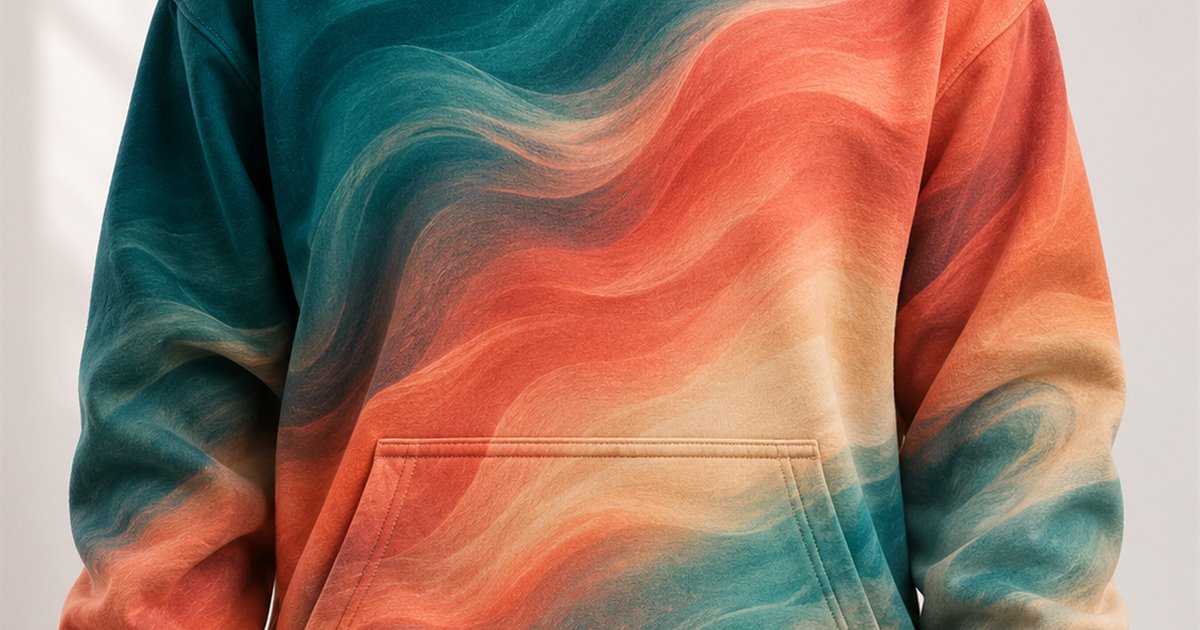
If you want the same edge-to-edge treatment on a heavier garment, the custom 3D print hoodies use a similar full-surface approach with more fabric to work with, and the hoodies collection shows how a wrap-around pattern reads on a looser cut.
Print Durability: What Actually Fails
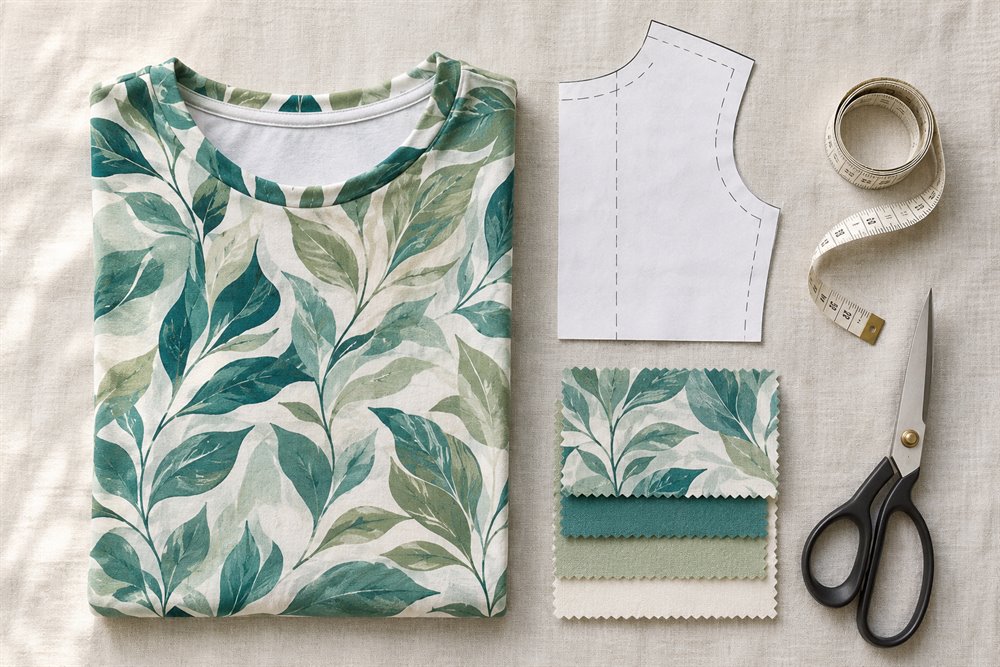
A sublimation print on polyester is genuinely tough. Most failures come from the wrong fabric, the wrong wash, or a print that was never properly fixed.
The three common failure modes
- Cracking along folds. Typical of surface prints on cotton blends, where the ink layer is thicker than the fabric can flex.
- Fading in patches. Usually bleach, harsh detergent, or a hot dryer rather than normal wear.
- Colour shift at the seams. A production issue: panels printed on different runs of fabric, or a seam that lands on a gradient.
Care rules that keep the print alive
Wash cold on a gentle cycle, inside out, with similar colours. Skip bleach and fabric softener — softener leaves a film that dulls sublimation ink. Tumble dry low or hang dry; high heat is the single most common cause of premature ageing. Iron on the reverse only, and never directly on the print. Follow those four habits and a good AOP tee keeps its colour for years of regular wear.
Preparing Artwork That Prints Well
Most disappointing all over print tees were doomed at the file stage, not in production.
Resolution and repeat
Supply artwork at 150 dpi at final print size, ideally 300 dpi for fine linework. If the design is a repeat pattern rather than a single placement, the edges must tile seamlessly — otherwise a visible grid appears where the pattern restarts.
Colour and contrast
Screens glow; fabric does not. Rich saturated blues and greens print slightly deeper, and very bright neons can shift on polyester. Convert to CMYK to preview, and avoid extremely fine gradients in large flat areas. Strong mid-tone contrast survives printing better than subtle shading.
Keep text off the stress zones
Names, numbers and small logos placed on the side seam, underarm, or shoulder seam will be interrupted or distorted. Move type to the chest, upper back, or a full front panel where the fabric is flat.
Common Mistakes to Avoid
- Approving a flat mockup only. Ask for a seam-aware proof so you can see where the pattern breaks.
- Choosing cotton for a photographic print. Detail is sharper and more stable on polyester.
- Sending a screenshot or a compressed JPEG. Artwork needs the original file.
- Washing hot. Heat is what ages a print, not time.
Frequently Asked Questions
What is the difference between all over print and a regular printed t-shirt?
A regular printed tee has the design applied to a finished, sewn blank, usually on the front or back only. An all over print tee is printed on fabric first and then cut and sewn, so the artwork covers the entire garment including sleeves, shoulders and hem.
Will an all over print t-shirt fade?
A dye-sublimation print on polyester holds colour well and does not crack or peel. Fading usually comes from bleach, hot water, harsh detergent or a hot dryer rather than normal wear, so cold washing and low-heat drying make the biggest difference.
Can I print a photo on an all over print tee?
Yes, and polyester is the better base for photographic artwork because sublimation reproduces fine detail and smooth gradients more accurately than cotton pigment printing. Supply the original image file rather than a screenshot or a messaging-app copy.
How should I choose a size for an all over print t-shirt?
Lay a shirt you already like flat, measure chest width, body length and sleeve length, and match those numbers to the size chart. Dense dark prints tend to read slimmer, so size up if you are between sizes and want a relaxed fit.
Does the print continue across the seams?
It should. Quality production prints with bleed so the artwork continues across the side and shoulder seams with only a thin interruption. Ask to see a seam-aware proof before production, especially if the design includes faces, text or a centred logo.
Ready to Build Yours
An all over print tee only looks effortless when the fabric, the pattern placement and the seams are planned together. Start with the custom all over print t-shirt: upload your artwork, review the placement proof, and choose the fit you actually wear. If you are still deciding between a placement print and a full wrap, browse the t-shirts collection to see both treatments side by side, or head to the full shop for the rest of the custom apparel range.